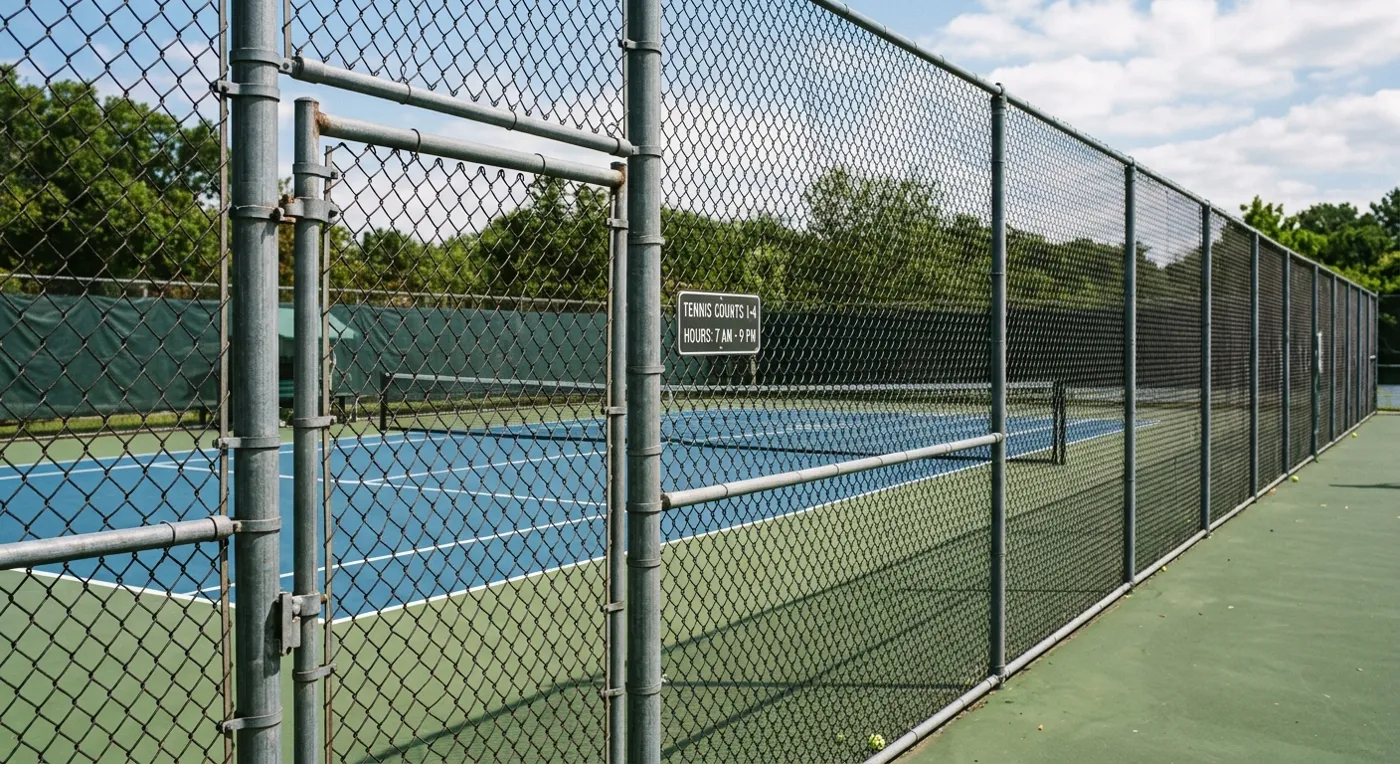
Court fences are tall, and windscreen makes them work hard. We size the posts and footings for that and talk to the city's planners about height before building.
A court enclosure is tall chain link, commonly 10 or 12 feet, on heavy posts with top, middle and bottom rails. We build and repair them for homes, schools, clubs and apartment communities, for tennis and for the pickleball courts now being striped across the South Bay.
Windscreen is where court fences get into trouble. Fabric on a tall fence multiplies the load on every post, so the framework and footings have to be sized for it from the start. Adding screen to a light old fence is how posts end up leaning.
Height puts these fences outside the ordinary residential limits, so expect a conversation with the city's planning staff before construction. We bring the layout and heights and find out what approval is needed. Vinyl-coated mesh in black or green is the usual finish.
Tennis court fencing in San Jose: common questions
How tall should a court fence be?
Ten feet is common for tennis, with some courts using 12 at the ends. Pickleball courts are often fenced lower. The right height depends on the sport and what sits next to the court.
Can you convert tennis fencing for pickleball?
Yes. Dividing fences and extra gates can be added inside an existing enclosure once the new court layout is set.
Does a court fence need city approval?
Almost certainly, because of the height. We check with the planning office for your address before quoting a final design.
How it works
- Free estimate: Call, text or book online. We visit, measure and talk through options.
- Written quote: Clear pricing with material choices side by side.
- Permits & planning: We check local rules and help with permits before we dig.
- Install & clean-up: Our crew installs, cleans up and walks the finished fence with you.